


As Australia’s aged-care sector continues to grow, the need for reliable, specialist freight handling becomes increasingly urgent. From medical equipment to everyday supplies, aged-care facilities rely on logistics services that are not only efficient but also sensitive to the unique needs of vulnerable environments. What may seem like a routine delivery is often far more complex in this space, requiring planning, coordination, and a deep understanding of healthcare settings.
This article explores how complex freight logistics function within the aged-care industry, why it matters, and how the right solutions can improve service delivery, reduce stress on staff, and ultimately support better care outcomes.
Why Aged-Care Freight Needs a Specialised Approach
Logistics for aged-care facilities differ significantly from traditional freight. These environments operate under strict schedules, regulatory frameworks, and health protocols. Delivering the right item to the right place at the right time is not just a matter of convenience. It is often a critical part of resident wellbeing.
Aged-care settings often require deliveries to be made with minimal disruption. Medical equipment or consumables might need to arrive at specific times or locations within a facility, which calls for thoughtful coordination. Specialist freight handling in this space is more than logistics. It is a contribution to quality of life and efficient care.
Meeting the Real Demands of Sensitive Freight
Delivering into healthcare settings means every item must be handled with attention to detail. This includes mobility aids, beds, diagnostic tools, or even consumables that need upright storage or climate control. For these reasons, the logistics supporting aged-care services need to be considered as sensitive freight for healthcare.
Providers that offer freight solutions for aged care must ensure that goods are packed, transported, and delivered in a condition that is ready to use. There is little margin for error when the recipients are often depending on these items for immediate support.
Understanding Industry Pressure Points
The aged-care industry in Australia is experiencing reforms and increasing expectations from both regulators and the public. Facility managers face a constant balancing act between compliance, staff capacity, and the demands of operating a high-standard care facility. Logistics may seem like a back-end function, but when it falters, it affects everything from resident comfort to operational flow.
By choosing aged-care logistics solutions designed specifically for this sector, these challenges become easier to manage. When freight arrives as expected and in perfect condition, facility staff can focus on residents instead of worrying about where their supplies are.
What Makes Freight Complex in Aged-Care Logistics
From the outside, delivering a package might appear simple. But within aged-care logistics, every touchpoint matters. Several factors elevate these deliveries into a category known as complex freight handling.
Handling Medical Equipment with Precision
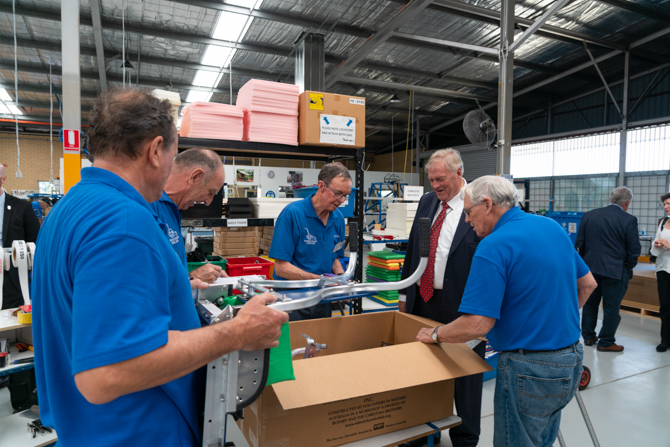
Medical equipment transport in Australia involves more than just careful packaging. These are high-value items that must be handled with complete awareness of their function and fragility. Whether it is a dialysis chair, an oxygen system, or a patient lift, logistics teams need both the tools and the training to transport these items safely.
It is essential that freight providers adhere to proper handling techniques and maintain consistent documentation throughout the transport journey. Even the smallest misstep can affect a facility’s ability to care for its residents efficiently.
Navigating Challenging Delivery Environments
Aged-care facilities are built for comfort and accessibility, not for heavy freight. Narrow hallways, patient areas, and security checkpoints make delivering freight into these environments a challenge that not every logistics provider is equipped for.
That is why safe freight delivery for vulnerable environments requires a different mindset. Drivers and handlers must understand how to move discreetly, how to communicate with care staff, and how to ensure that the space is respected at every step.
Coordinating Across Multiple Touchpoints
In a standard retail delivery, the process ends when the package is signed for. In aged-care, there are often multiple stakeholders involved. Nurses, administrators, suppliers, and sometimes even family members need to be considered in the logistics timeline.
Third-party logistics providers for aged-care facilities must operate with a strong understanding of these dynamics. From planning to tracking and final handover, the freight provider becomes part of a bigger system of care.
How Aged-Care Logistics Supports Better Care
Freight logistics may happen behind the scenes, but its role in aged-care environments is foundational. Smooth, reliable deliveries reduce stress, support compliance, and ensure that care flows uninterrupted.
Ensuring Timely, Predictable Supply Chains
Timely deliveries keep everything running on schedule from medications and meals to rehab sessions and equipment installation. When logistics are reliable, aged-care teams can build routines that foster stability and comfort for residents.
Specialist freight handling helps eliminate uncertainty, making it easier for staff to plan ahead and provide consistent care.
Empowering Staff Through Operational Relief
When freight services are delayed, incorrect, or hard to track, it creates additional work for staff who are already operating at capacity. Reliable business-to-business logistics solutions take that burden off their shoulders.
By handing over this part of the workflow to a provider that understands aged-care, teams can focus on human needs rather than logistics paperwork or follow-ups.
Building Confidence with Residents and Families
Consistent, error-free logistics build trust not just with the facility, but also with the people they serve. When residents receive equipment or items they need on time and without complication, they feel valued and cared for. Families also take notice, reinforcing a facility’s reputation for professionalism and attention to detail.
The Future of Freight in Aged-Care
As Australia’s population ages, the demand for aged-care facilities and the logistics systems supporting them will only increase. We are already seeing the shift toward smarter, more connected logistics that provide live tracking, temperature monitoring, and integrated communication.
Moving forward, we can expect logistics providers to play a more strategic role in aged-care operations. Facilities will prioritise partners who can offer not only reliable transport, but also insight, innovation, and a commitment to care-focused outcomes.
Supporting Care Through Thoughtful Freight Logistics
Behind every successful aged-care operation is a web of systems working to support residents and staff. Freight logistics may be invisible to the average person, but for facility managers and operations teams, it is a critical success factor.
What are your biggest challenges in aged-care freight logistics? Share your experiences and insights in the comments below to help us understand how to better support the industry.