Skip to content


High-value commercial goods can be exposed to risk as soon as a container is opened. The way goods are unloaded, sorted, handled and staged can affect whether they remain installation-ready, sale-ready or project-ready.
Damage during unpacking can delay projects, create replacement costs and disrupt downstream delivery schedules. For fragile, oversized or finished goods, a small handling issue during devanning can create much larger problems later in the supply chain.
For this reason, container unpacking should be treated as a controlled handling process, not just a labour task. The process should be planned around the freight profile, not only the need to empty the container quickly.
Key Takeaways
- Damage prevention starts during container unpacking.
- Fragile, finished and high-value goods need handling matched to their cargo profile.
- Warehouse intake reduces unnecessary rehandling after devanning.
- Exception checks help identify issues before goods move downstream.
- Delivery should be planned from confirmed stock condition and readiness.
- Snapes supports safer unpacking, storage and delivery coordination for commercial imports.
Common Damage Risks During Container Unpacking
Damage risk increases when the cargo profile, unpacking method, labour plan and warehouse intake process are not aligned. The risks are not limited to broken items. They can also include lost components, delayed discovery, rehandling damage and poor storage preparation.
The table below shows common risks and how planning can reduce exposure during the unpacking process.
| Damage Risk | Where It Happens | How Planning Helps |
| Crushed cartons | During manual unloading or stacking. | Use controlled handling and avoid over-stacking during unpacking. |
| Surface damage | When finished goods are dragged, bumped or rehandled. | Match handling methods to cargo sensitivity. |
| Misplaced items | During mixed-SKU unpacking. | Sort and label goods as they leave the container. |
| Equipment damage | When bulky freight is moved without the right tools. | Prepare labour, forklifts, trolleys or lifting support before arrival. |
| Delayed discovery | When goods are not inspected at intake. | Check exceptions before freight moves into storage or delivery. |
Match Handling to the Cargo Profile
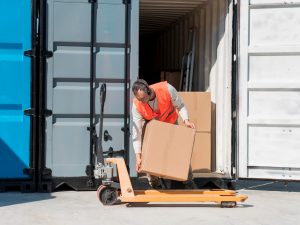
Container unpacking and devanning services should be planned around the freight profile. Finished fixtures, commercial equipment, retail displays and fragile goods may need slower, more controlled handling.
If the unpacking team does not understand the cargo profile before arrival, the process may create unnecessary movement or pressure on sensitive goods. For example, a cartonised commodity product and a custom-built display unit should not be handled with the same assumptions.
Cargo details should be reviewed before the container is received. Weight, dimensions, fragility, packaging type, stacking limits and destination requirements all influence how the unpacking process should be set up.
Use Warehouse Intake to Reduce Rehandling
3PL warehousing and storage can reduce damage risk when goods are checked, labelled and placed correctly after unpacking. A clean intake process avoids repeated movement and helps keep goods organised for dispatch, storage or staging.
Rehandling is one of the most common sources of avoidable damage. If goods are unloaded into the wrong area, stacked without a plan or stored without clear labels, they may need to be moved again before they can be used.
Good warehouse intake reduces this risk by giving each item a clear next step. Goods can be inspected, separated, palletised, labelled and placed in the right location before further movement occurs.
Protect High-Value Assets Before Dispatch
Protecting high-value assets requires planning across handling, storage and delivery, not only during transport. The earlier damage prevention is built into the workflow, the less likely problems are to appear at the customer, store or project site.
High-value commercial goods may include finished joinery, equipment, displays, fixtures, furniture, appliances or project-critical components. These goods may be costly to replace and may have long lead times if damaged.
Damage prevention should therefore cover unloading technique, staging area, protective materials, inspection points, storage location and delivery readiness. The process should protect both the item and the schedule it supports.
Plan Final Delivery Based on Condition and Readiness
Transport and last-mile delivery should only be planned once goods are checked, visible and ready for the next movement. This reduces the risk of sending incomplete, damaged or incorrectly grouped freight into the domestic delivery network.
If damage is discovered only at the customer site, options become more limited. The business may need urgent replacement stock, additional transport, customer communication or project rescheduling. Early checks during unpacking give teams more time to respond.
Delivery planning should start from confirmed stock condition. If goods are fragile or high value, dispatch should also consider loading method, route timing, site access and final handling requirements.
Careful Unpacking Protects Commercial Outcomes
For high-value commercial imports, devanning quality affects more than the warehouse. It can affect installation schedules, launch dates, store readiness, customer satisfaction and revenue timing.
A controlled process gives importers greater confidence that goods are ready for storage, staging or dispatch. It also helps separate goods that can move forward from goods that need exception handling.
Careful unpacking does not necessarily mean slow unpacking. It means using the right process for the cargo profile so goods are protected while still moving efficiently into the next logistics stage.
Practical Planning Checklist for Importers
A practical way to improve the process is to define responsibilities before freight arrives. Warehouse teams, importers and downstream delivery teams should understand what will happen at each stage, who owns the next action and what information needs to be shared. This reduces the chance that goods arrive before the receiving process is ready.
The planning checklist should cover cargo sensitivity, handling instructions, inspection points and stock condition before dispatch. It should also confirm documentation, contact points, exception reporting, storage availability and the expected timeline from arrival to dispatch. These details are easier to resolve before the container is opened than after freight is already on the warehouse floor.
Importers should also decide what success looks like at the end of the process. For some shipments, success means goods are received into inventory on the same day. For others, it means freight is staged by customer, store, project phase or site location. The plan should match the commercial outcome the shipment needs to support.
When these details are agreed early, the post-arrival process becomes less reactive. Teams can focus on moving goods through the workflow instead of solving preventable issues caused by missing information or poor timing.
This also improves internal communication. Sales, operations, warehouse and delivery teams can work from the same view of what has arrived, what is ready and what still needs action before freight moves downstream.
How a Connected Logistics Partner Supports the Workflow
A connected logistics partner helps align the physical freight movement with the operational information needed to manage it. This is important because imported goods do not become commercially useful until they are visible, organised and ready for the next movement.
By connecting container handling, warehouse intake, storage and delivery planning, businesses can reduce repeated handoffs and make better decisions from confirmed stock readiness. This also gives sales, project and operations teams more confidence when communicating timelines to customers or internal stakeholders.
For importers, the value is not only speed. It is also control. A controlled workflow reduces uncertainty between the moment goods arrive in Australia and the moment they are ready for domestic distribution, customer delivery or project execution.
This is also where logistics can support better business planning. When the receiving process, inventory record and delivery plan are connected, teams can make decisions from confirmed operational status rather than assumptions about what should have arrived.
That visibility is especially valuable when freight supports customer commitments, launch timelines, project schedules or multi-location distribution requirements.
Reduce Damage Risk from Container to Delivery
Snapes supports careful container unpacking, warehouse intake, storage and onward delivery coordination for high-value commercial goods.
By aligning handling, inspection, intake and transport planning, importers can reduce avoidable risk before goods reach customers or project sites.
Connect with Snapes to plan safer handling for your containerised commercial freight.